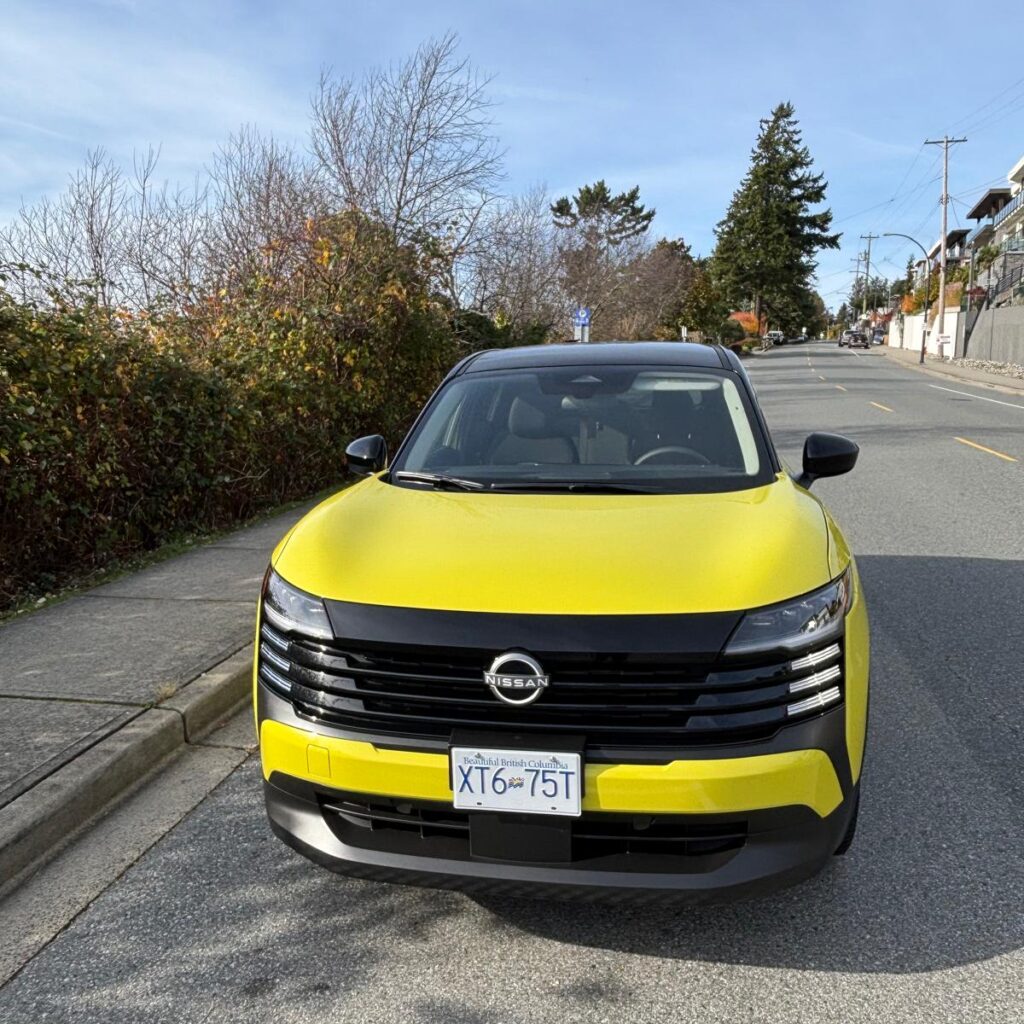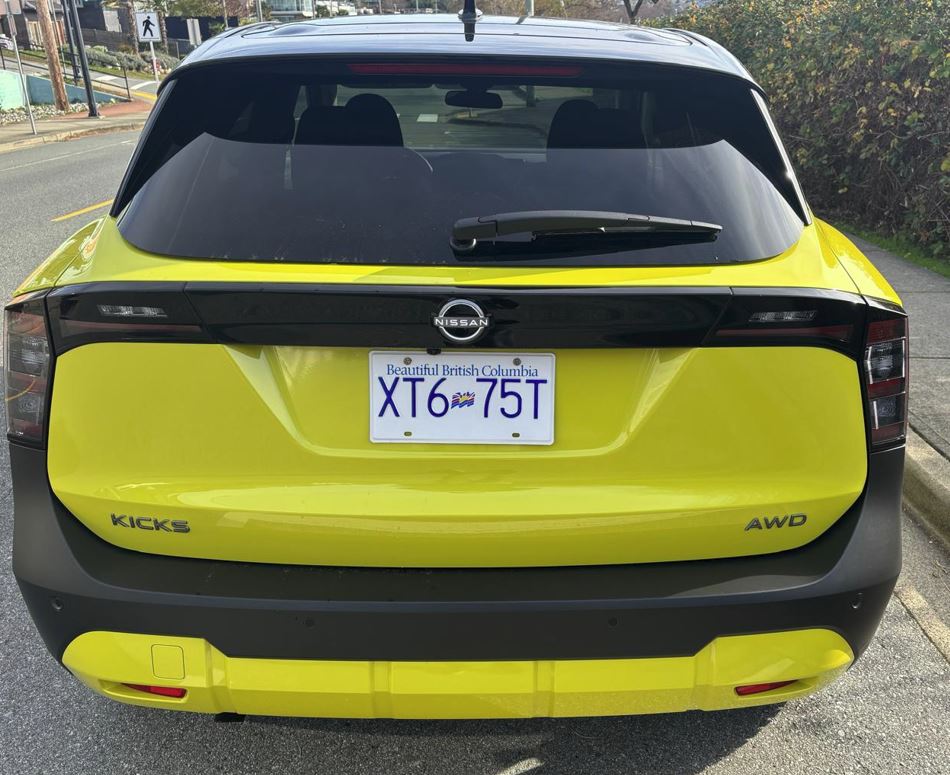
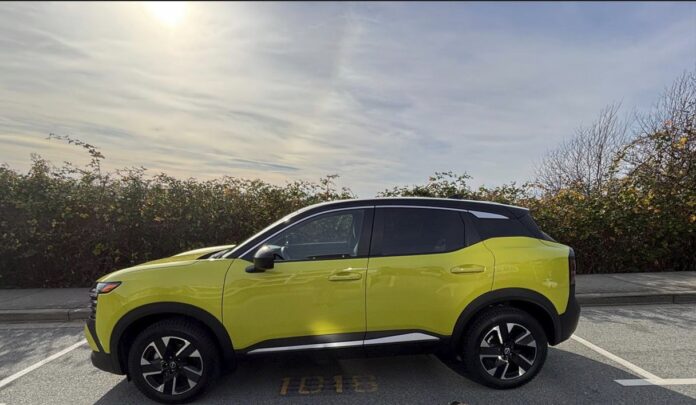

The 2025 Nissan Kicks SV is a subcompact SUV with all-wheel drive (AWD) in a two tone black and yellow. It reminds one of Bumblebee from Transformers. However, I was not holding my breath for the Kicks to transform. The black and yellow finish set this Kick apart. This color combination can be seen from miles away.
Exterior:
The exterior of the Kicks is boldly redesigned. It features low profile LED headlights, LED rear combination lamps, and LED turn signals. The new athletic exterior with V-motion grille sets the Kicks apart. The rear spoiler with the integrated LED third brake light along with the 17″ alloy wheels provide a stylish appearance. There are a wide range of single or two tone color combinations available to personalize. I like Nissan’s reference to “floating roof” as a specific design element. This is where the vehicle’s rear pillar is blacked out to create an optical illusion that the roof is not connected to the rest of the body. This effect is visibly highlighted when a two tone color combination is selected, available on the SV or SR model. As for my tester Kicks SV the two tone color combination of black and yellow was a sight to be seen.
Interior:
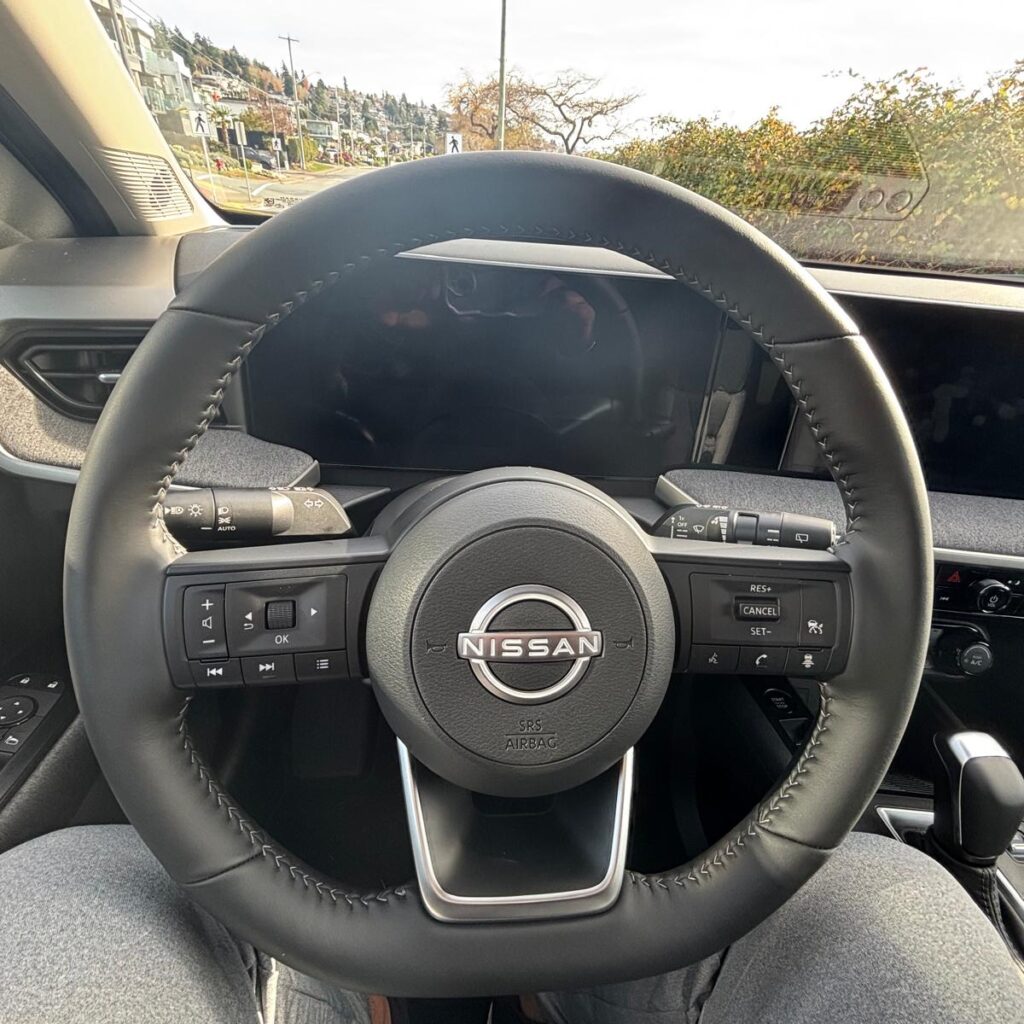
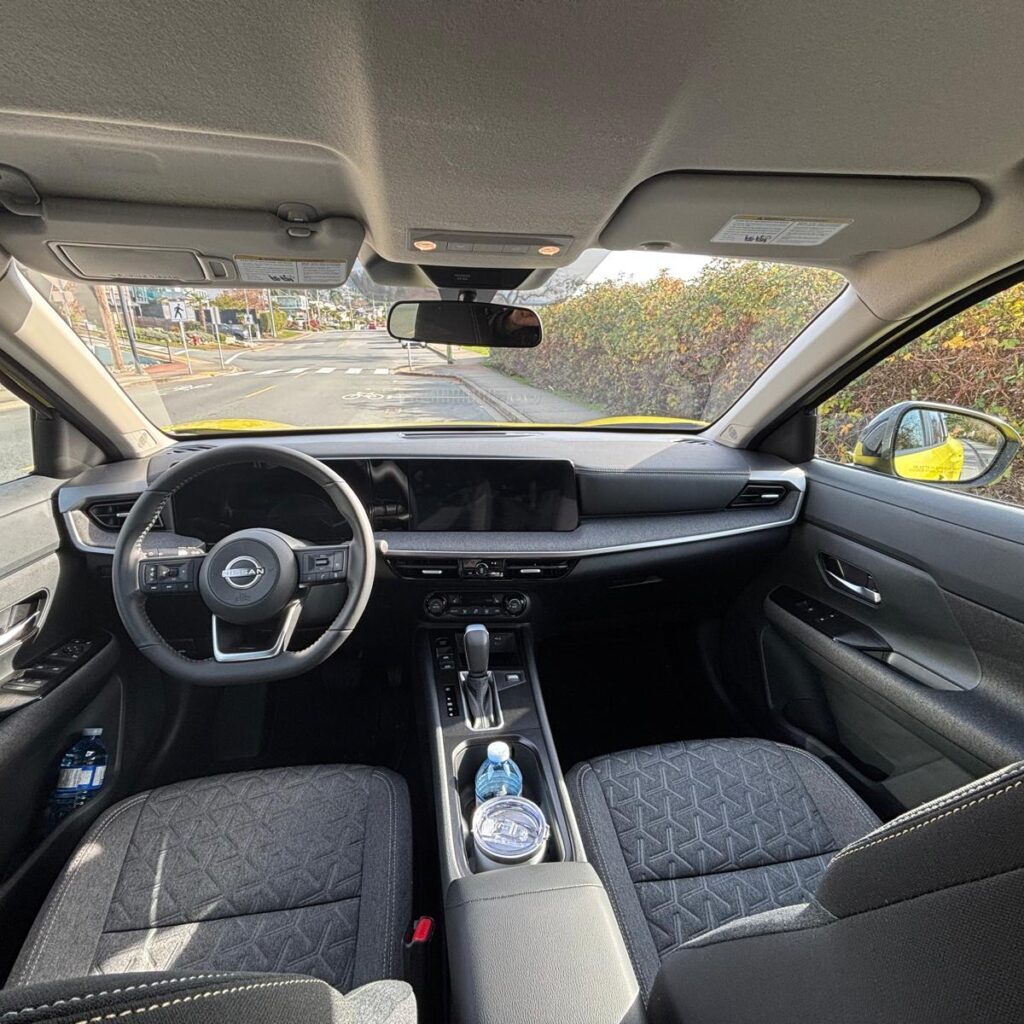
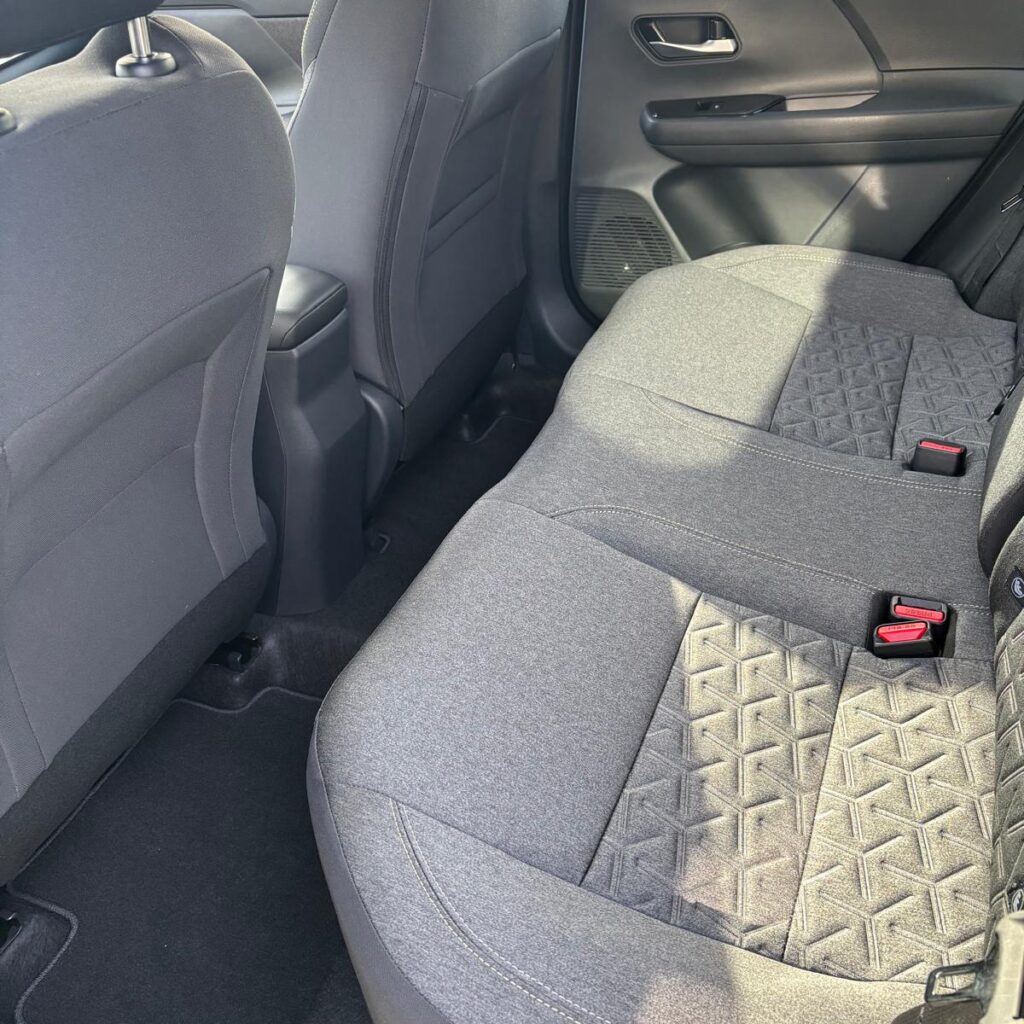
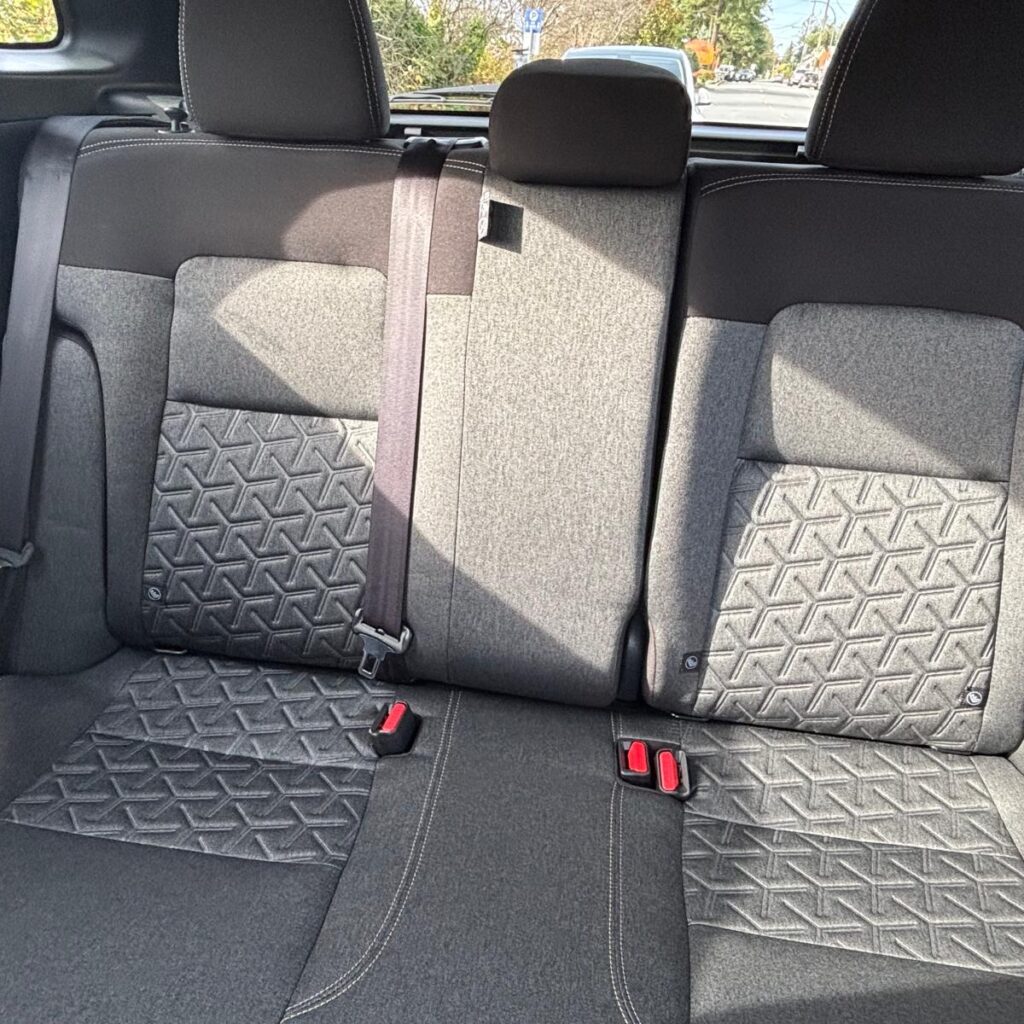
The interior of the Kicks is well put together. It provides seating for five passengers. As for the driver, the Kicks has 7″ digital dashboard with advanced driver display for vehicle information that is easy to use and read. The steering wheel has audio and Bluetooth mounted controls. My favorite features are the heated front seats and the heated steering wheel. The front seats have handles for manual adjustments and no power seats on the trim levels. Nissan dropped the ball because nobody has the time to manually adjust their seating. Moreover, the hard plastics on the door panels are tacky and outdated. The legroom for the rear passengers is cramped and tight. There is no sunroof on the SV model. Moreover, there are no rear vents and this is puzzling for a vehicle competing in the latest crossover SUV market.
The seating is exceptionally comfortable as Nissan has designed seats inspired by NASA’s zero gravity space travel in mind. When in space, the human body naturally keeps a neutral posture, as a result less pressure is on the body.
Therefore, the Zero Gravity seats keep your posture in an ideal weightless position while driving on Earth. One benefit of zero gravity seats is reduced stress. This is possible as Nissan added 14 pressure points to the zero gravity seats to help maintain a neutral spine position. As a result, the natural spine position allows to reduce the stress placed on one’s bones and joints, reducing overall stress. A surprising fact, when Nissan was testing the seats, they took blood samples of the test drivers to ensure muscle stress was actually reduced. Secondly, increase in energy for the driver and passengers as Nissan designed these seats to increase blood flow and reduce muscle fatigue. I witnessed the zero gravity seats alleviated the stress on my shoulders and back. Therefore, I did not get fatigued during long drives. Lastly, the zero gravity seats are superbly comfortable for all body types.
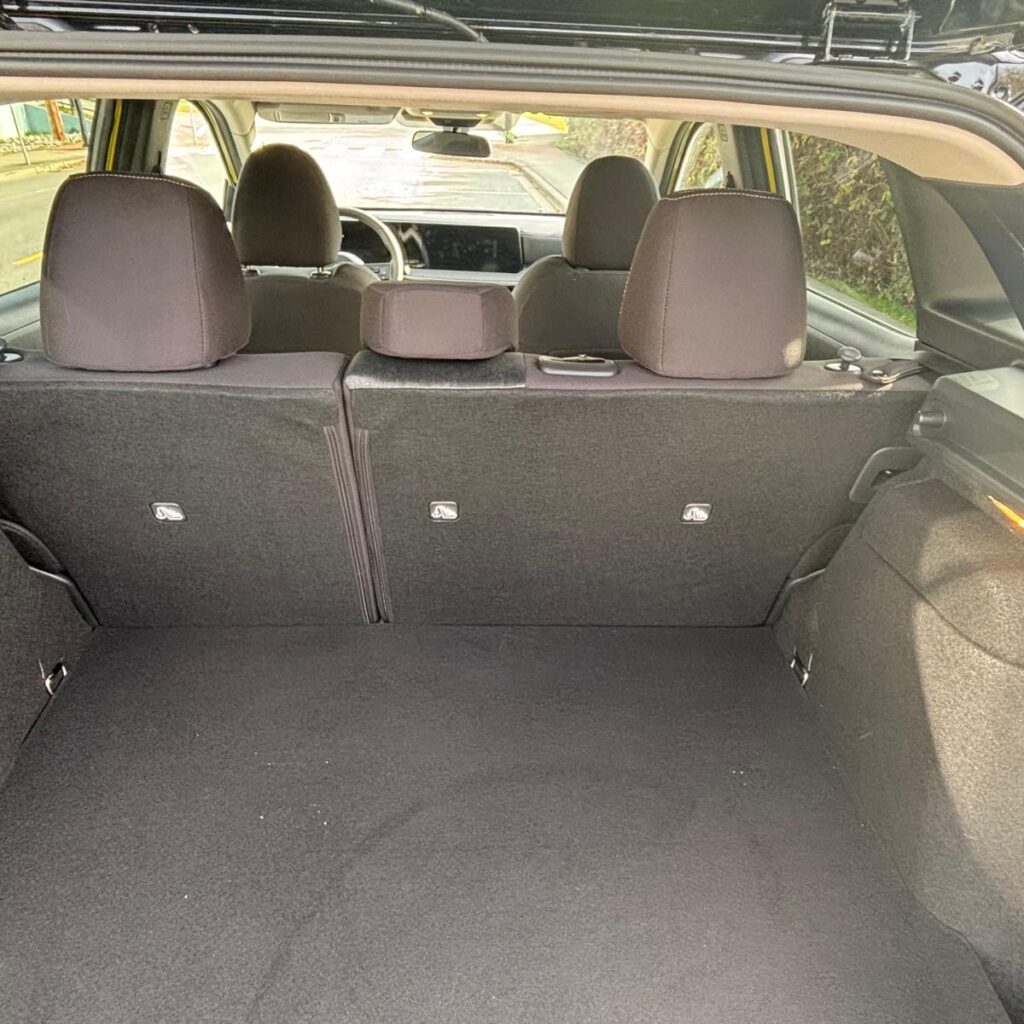
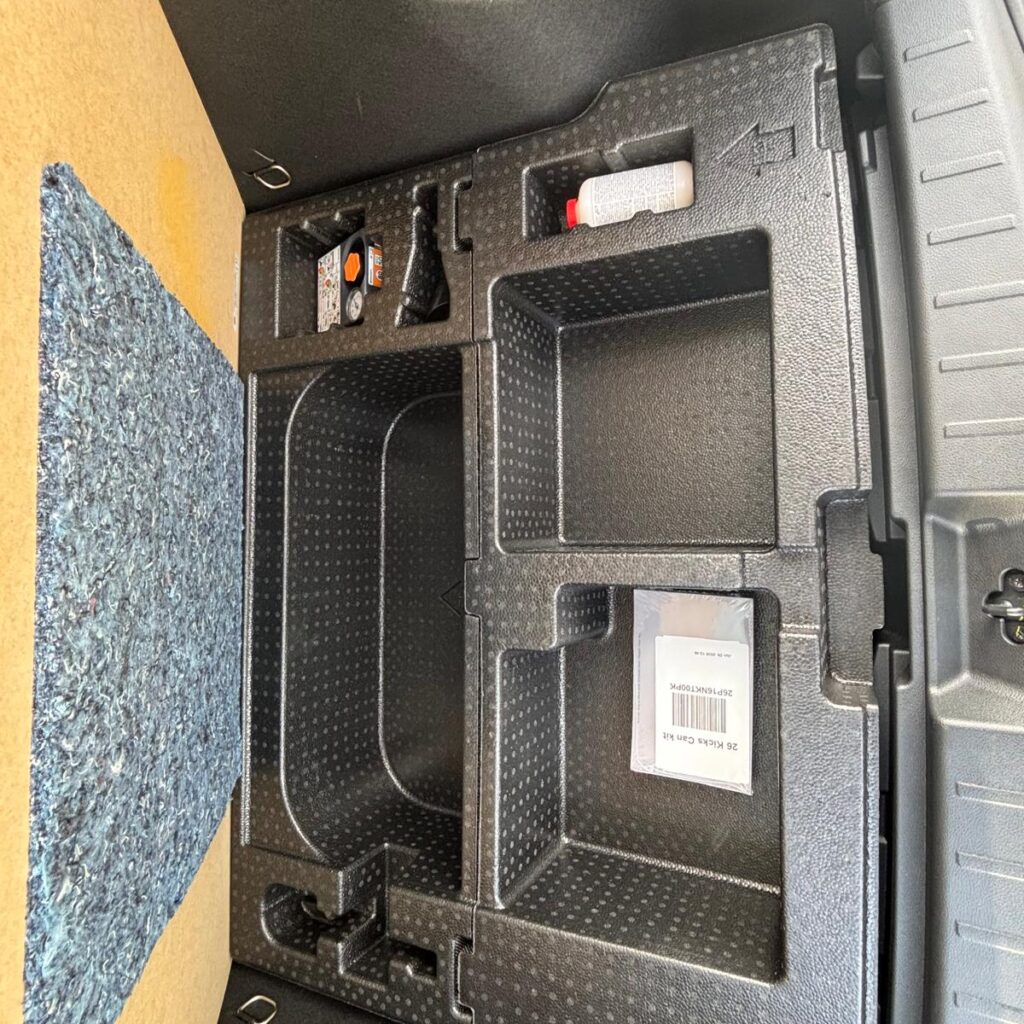
The cargo space of the Kicks SV is limited since its AWD system requires space for the rear differential and uses independent suspension. This reduces cargo volume when compared with the front-wheel drive model. However, the SV trim includes a flexible luggage board that allows one to raise the floor for easy loading/unloading. There is more cargo space available when the rear seats are folded. The cargo space is not the greatest when compared with other subcompact SUVs in its class.
Infotainment and Connectivity:
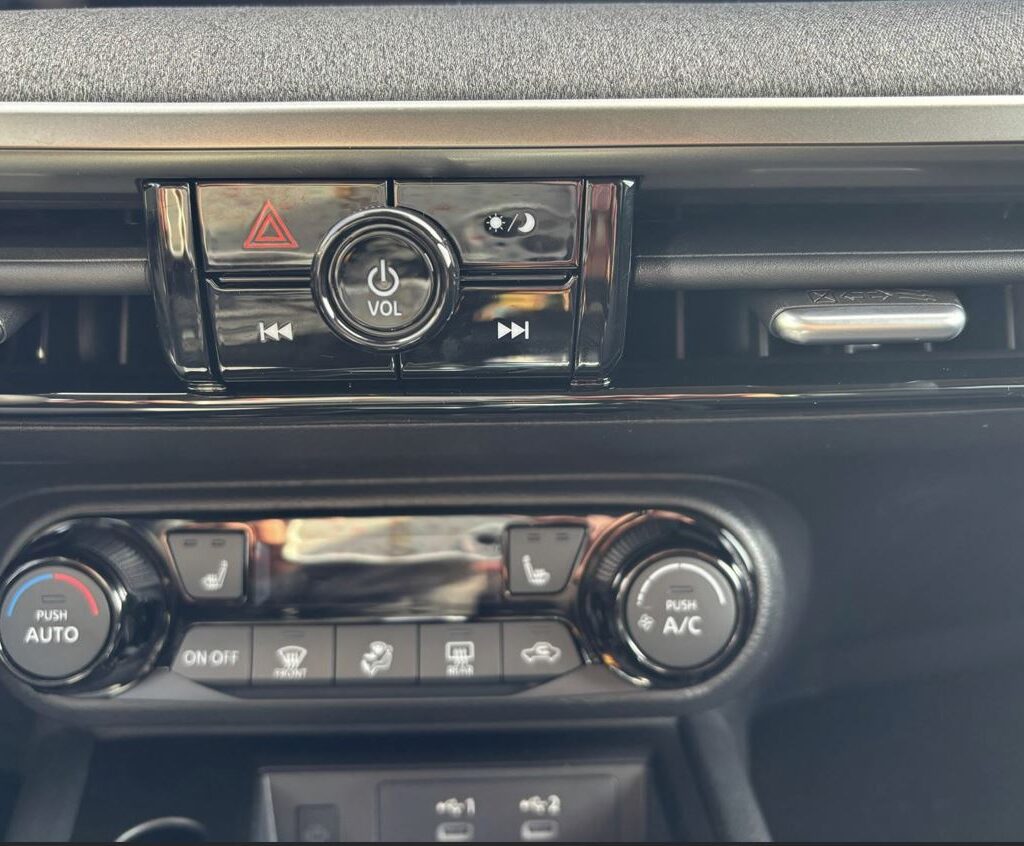
The infotainment system features a large 12.3 inch touchscreen supporting wireless Apple CarPlay and Android Auto. It is easy to use and features Bose audio system with six speakers. The Bose system provides excellent sound for the class. The wireless charging pad and the two USB-C ports are a nice feature. Some flaws I noticed were the lack of built-in navigation, where one has to rely on their phone. Secondly, all the controls are on the touchscreen and it is distracting while driving. I would prefer a combination of touch and physical controls for the infotainment system. Overall, the infotainment system is decent but it could be improved on newer models.
Engine, Transmission, and Performance:
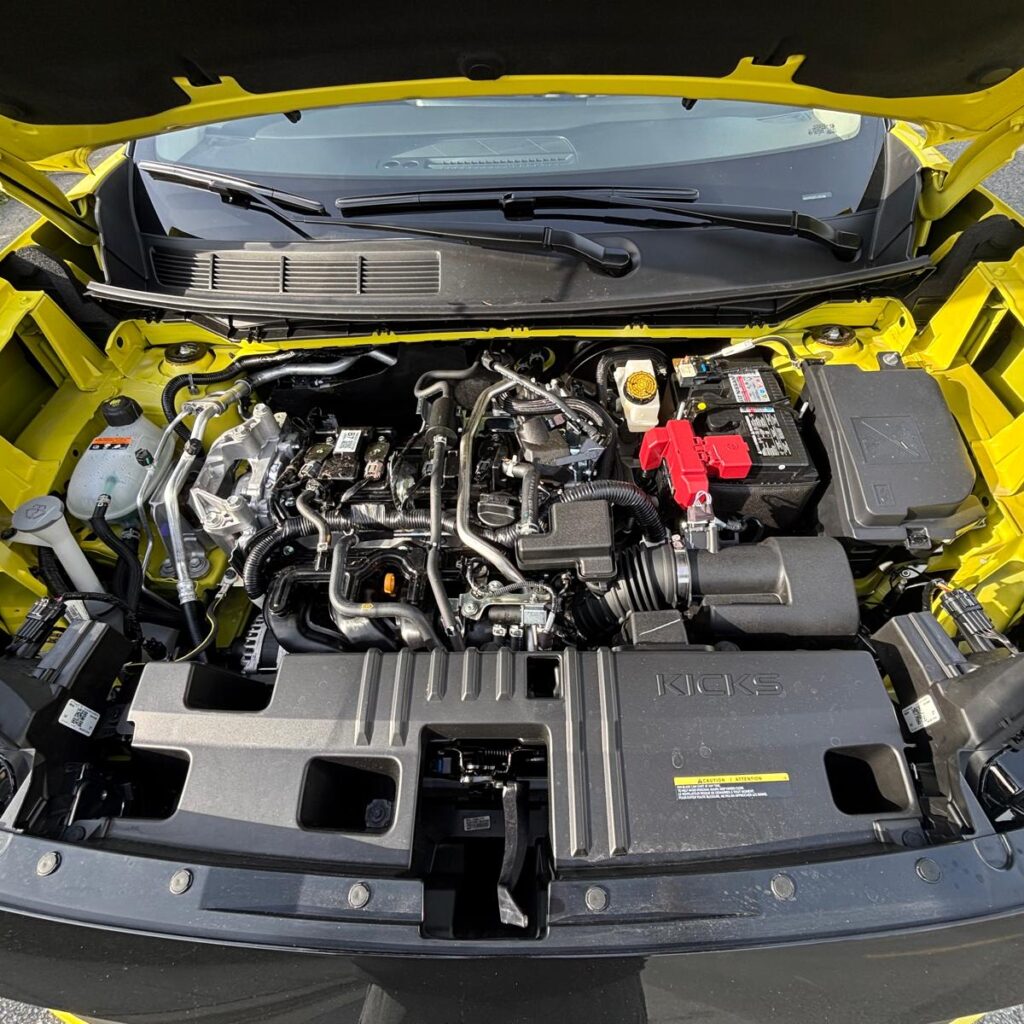
The Kicks SV AWD is powered by 2.0–litre DOHC 4-cylinder engine. It produces 141 horsepower and 140lb-ft of torque. The power is routed through an updated Xtronic Continuously Variable Transmission (CVT).
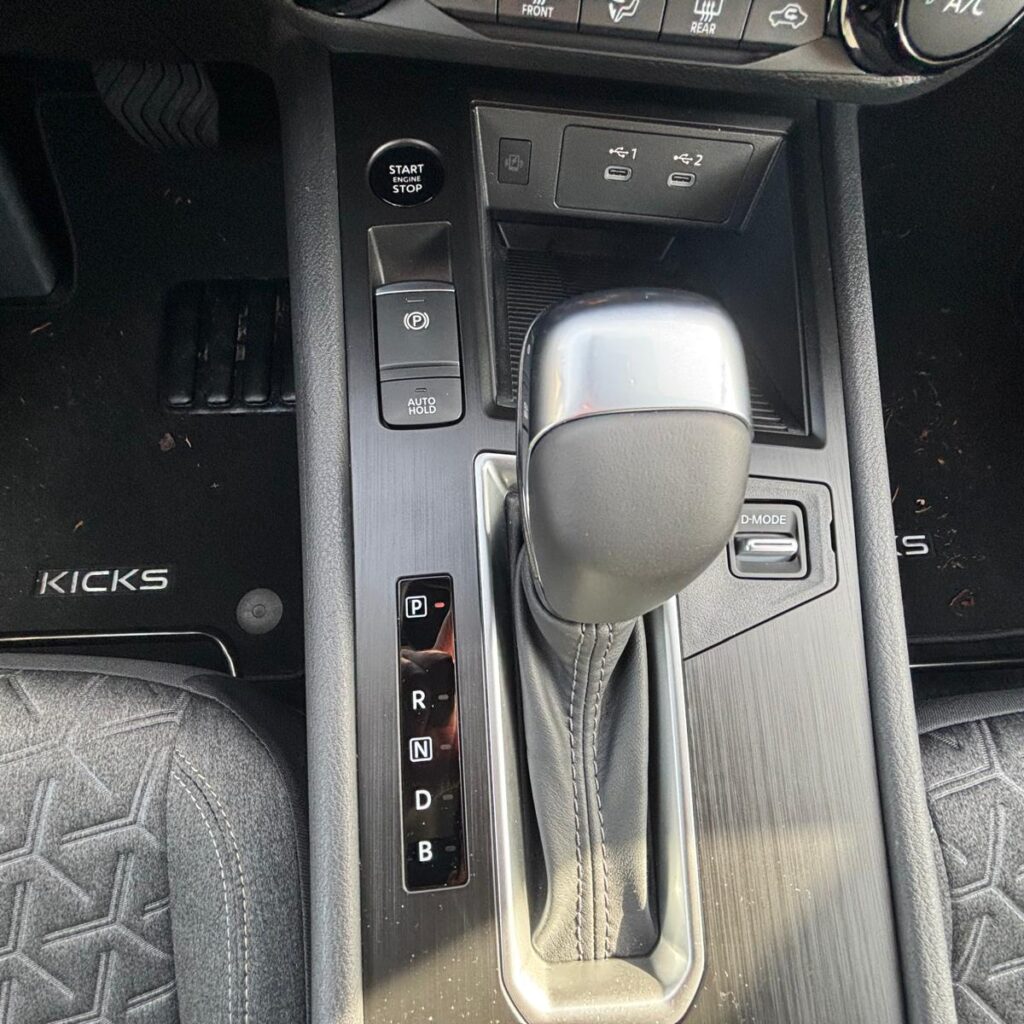
For the drive, the tester Kicks is a fair bit heavier with the AWD mechanism, and one cannot help notice the lack of power. It is underpowered in certain situations when tackling steep hills. The CVT takes a lot of power and effort when facing rough terrain. On the freeway, there is an initial thrill of the Kicks taking off but the power delivery tapers off and the CVT slows down. The interior cabin is noisy on the freeway. The CVT’s wheezy droning at high speed is abundantly a mood killer and cannot be disregarded with music playing in the background. The CVT has no physical gear shifts and feels lifeless and dull. The Kicks provides great fuel economy. Moreover, the Kicks is equipped with four different drive mode selectors including, normal, eco, sport, and snow.
Driving the Kicks in normal drive mode responds well to sudden changes in direction and city speeds in stop and go traffic. The Kicks is designed for city driving and is easy to park in tight spaces and performs well in the city. Driving on the freeway in sports mode I was expecting the throttle to respond. However, I was left dissatisfied and disappointed. The 141 horsepower and the 140-ft of torque is not adequate as the Kicks is quite slow. Overall, Nissan could have done better by providing the Kicks SV with more horsepower to handle the everyday drive from city to freeway.
Safety and Driver-Assistance Features:
The Kicks SV is equipped with a plethora of safety features. Nissan has named its safety suite, Nissan Safety Shield 360. The safety features include, Intelligent Emergency Braking with pedestrian detection, predictive forward collision warning, rear automatic braking, blind spot warning, rear cross traffic alert, lane departure warning, high beam assist, and driver attention alert. One safety feature that stood out is the driver attention alert. Fatigue can be a dangerous factor while driving, especially during long road trips. The driver attention alert monitors driving patterns to build a baseline of normal driving habits and suggests breaks if fatigue is detected. The system alerts the driver with a coffee cup icon and a chime when it detects deviation suggesting fatigue or non-attention, like erratic steering corrections. However, the driver attention alert feature is a warning system only and should not replace attentive driving habits. Overall, the Kicks has great safety features.
Verdict:
The tester 2025 Nissan Kicks SV AWD is priced at $33,873 CDN. Comparing the Kicks SV with its subcompact SUV competitors like the Honda HR-V at $38,286.25 CDN for the Sport AWD model. The HR-V provides updated features and is more spacious. The HR-V’s exterior is rugged with mature aesthetics. The HR-V is provided with a muscular approach which is the way SUV’s are designed. The HR-V provides a refined design for the interior with high quality materials and more rear legroom and headroom compared to the Kicks SV. Moreover, the HR-V provides more cargo capacity when compared to the Kicks SV. However, the HR-V is also powered by 2.0-litre CVT and it produces 158 horsepower with 138-ft of torque. This additional horsepower provides noticeably better acceleration when compared to Kicks, making highway merging and passing easier. The HR-V is same as the Kicks with the AWD option. The HR-V is the subcompact SUV of choice, with extra power, more polish, and class leading resale value. Nissan’s focus with the Kicks is about the price and attract youthful buyers. In the end, I leave my readers to ponder which of the Nissan Kicks SV or the Honda HR-V they prefer?